
Rearranging Your Group's Tokyo Plans Around the Weather: Common Pitfalls and How to Avoid Them
Rearranging Your Group's Tokyo Plans Around the Weather: Common Pitfalls and How to Avoid Them
Three days before you leave, your weather app fills up with umbrella icons. Someone posts in the group chat: "Rain on Saturday... what do we do?" The read count keeps going up. Nobody replies.
There's a reason for that silence. Everyone assumes someone else will decide. With five people, or eight, it gets harder to tell who that "someone" is, and the silence lasts longer.
If you're still deciding where to go in Tokyo, think now about how you'll rearrange the plan if the weather turns. That alone changes how the day feels once you're there. This article covers four places where groups commonly stumble when the weather forces a change, and walks through how to avoid each one.
Weather Doesn't Break Your Plans So Much as Your Decision-Making
Let's start with one premise. Bad weather doesn't automatically ruin a trip. The groups that fall apart are usually the ones that never settled who decides, when, and how.
On a trip with American friends, gathering in the morning to ask "So, what's the plan?" is a familiar scene. With a small group, that works. As the group grows, though, everyone's "I'd kind of like to..." piles up, and the whole morning goes to talking.
Tokyo adds its own conditions. A day in Tokyo is often built around reserved experiences and train travel. Because that structure is fixed, every delay in deciding takes options off the table. In other words, the longer the discussion runs, the fewer choices you have left.
So this article won't try to forecast the weather. It covers the preparation that keeps you calm when the weather changes. It's written so the group can share it as-is, and the trip planner doesn't have to carry everything alone.
Pitfall 1: Looking for Backup Dates Only After Seeing the Forecast
This is the most natural mistake, and the one most likely to leave you stuck. You see a rain forecast and only then say, "Let's move it to another day."
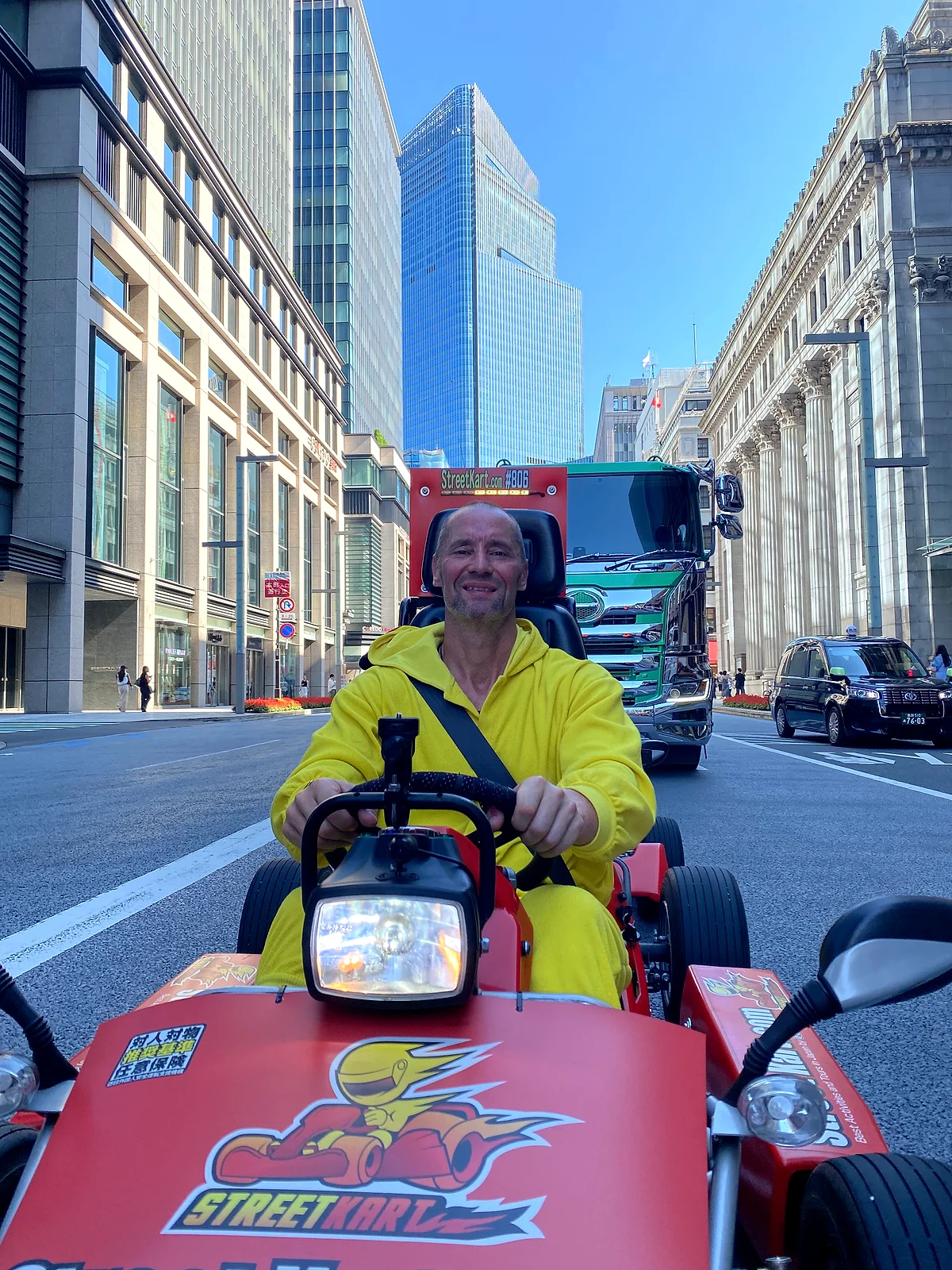
In that order, reserved experiences like Street Kart are the first place you hit a wall. One confirmed fact: weekends tend to book up. If you try to move to a weekend at the last minute, there may not be a slot that fits the whole group. And the requirement isn't one spot. It's a spot for everyone, which matters more the bigger the group gets.
Reverse the order and the problem goes away. When you book, hold a "first-choice day" and a "backup day" as a pair. Here are the steps:
- First, list the days during your Tokyo stay when everyone is available
- Pick your first-choice day from that list
- Pick the backup candidates from the remaining days
In step 1, account for members who arrive late, members with separate plans partway through, and members on early flights home. Build a list of "days when everyone is together" and keep it in a shared note. Only choose backup days from that list. If you limit the candidates up front, you're much less likely to find, after rescheduling, that one person can no longer come.
Please check availability for your candidate dates and the terms for changing dates on the official website (kart.st).
Reservations are accepted via Facebook, LINE, and email, and contact details are on the official website. If you might move your date, ask how changes are handled when you contact them to book. Asking about weather-related changes and change deadlines on the spot is faster than guessing.
While you're preparing the booking, check the driving documents too. Driving with Street Kart requires you to be 18 or older and hold a valid driver's license, among other conditions. You need the original physical license; digital licenses aren't accepted. If you don't have the required documents on the day, you can't take part, and there's no refund. Make sure each member has their own documents ready and can bring them on the backup day as well. Requirements by license type vary by country, so check the driver's license information on the official website for details.
Pitfall 2: Deciding as a Whole Group on the Morning Of
This one is structural. In my view, what eats up time when a group rearranges its plans isn't the rain itself but the "So what do we do?" discussion.
Picture eight people standing in a circle in the hotel lobby, comparing weather forecasts on their phones. Every app shows a different chance of rain, the group splits over which number to trust, and nothing gets decided. Large groups fall into this easily.
To avoid it, settle two things in advance: a decision maker and a decision deadline.
For example, agree that "the night before, the decision maker checks the forecast, decides alone, and sends the group a single message." It also helps to have a template for that message:
- Plan A: As scheduled
- Plan B: Swap dates
- Meeting place and meeting time for each
If everyone has the details of A and B from the start, the message the night before can be as short as "Plan B this time." The idea is to have the discussion before the trip, not on the morning of.
There's one more thing worth settling ahead of time: the language of the day's briefing. Street Kart tour briefings on the day are generally in English. Guidance in Japanese or other languages depends on the staff on duty and isn't guaranteed. If anyone in your group isn't very comfortable with English, arrange for them to read the safety notes and tour flow in advance. That way, if rescheduling puts you behind, nobody is scrambling to re-explain things. The official website is available in 22 languages, so encourage everyone to read it in whichever of those they understand best.
Pitfall 3: Figuring Out Rainy-Day Plans When the Rain Arrives
"If it rains, we'll do something indoors." That sounds like a plan, but break it down and nothing is decided. The destination, how to get there, and when to meet are all blank. With a big group, travel and waiting time pile up while you search for somewhere to fill those blanks.
To avoid this, choose indoor options near your Street Kart location at the same time you choose the location. If you're still deciding where to go, this also helps you decide which location to pick.
Line Up Indoor Options Around Each Location
First, a clear distinction: the places listed here are not part of the tour route. They're options to visit before or after the experience, and you should plan them separately from the tour. With that in mind, here's a look by location.
If you choose the Akihabara location, Yodobashi Camera Akiba and Radio Kaikan are about a 3-minute walk away. Keep them in mind as nearby places to spend time as a group on a rainy day. Ueno Park, about 5 minutes away by train, is home to the Tokyo National Museum. On a day of heavy rain, you can rearrange things to fit the museum in before or after the experience.
If you choose the Shibuya location, Shibuya Hikarie and Shibuya Scramble Square are each about a 10-minute walk. Scramble Square includes the Shibuya Sky observation deck. On days with low clouds, though, the view from the deck changes. On a rainy day, I think it's safer to treat it as a shopping or dining option.
If you choose the Shinagawa location, atré Shinagawa connects directly to Shinagawa Station, and Shinagawa Intercity also has shops and restaurants. The location is about a 10-minute walk from Shinagawa Station. Shinagawa is also a Shinkansen stop, so you could tie this into your plans on the day you arrive in or leave Tokyo.
If you choose the Tokyo Bay location (Shin-Kiba), DiverCity Tokyo Plaza and Aqua City Odaiba in Odaiba are about 10 minutes away by car. There's one easy-to-miss catch here, though. "10 minutes by car" really is 10 minutes for one person, but when the whole group moves at once, you also have to work out how many taxis to split into. With a large group, plan the transportation along with the destination.
Finally, one note on counting locations. Of the seven locations in Tokyo, Akihabara No. 1 and No. 2 are in nearly the same spot, and so are Shibuya and Shibuya Annex. Rather than treating the count as "seven options," it's easier to plan the rest of your day if you think in terms of which area to base yourself in: Akihabara, Shibuya, Shinagawa, or Tokyo Bay.
Pitfall 4: Dismissing Heat, Cold, and Wind Because "At Least It's Not Raining"
When people think about rearranging for weather, they tend to focus on rain. But rain is just one part of the weather. On a group trip, heat, cold, and wind often matter more.
One fact tells you a lot about Street Kart. Tours run as scheduled in light to moderate rain, and raincoats are provided free in that case. The fact that you get a raincoat on rainy days shows how exposed this ride is to the weather. While driving, you feel the wind between the buildings, the sounds of the intersections, and the air of the season. That's what makes the experience fun, but it also means you feel the weather directly.
Tokyo summers can bring long stretches of hot, humid days. In midsummer and the lingering heat after it, sunshine can actually be a burden on some days. In winter, the air is cold, and driving adds wind on top of that. You can't pin down temperatures as "this month is this many degrees," so the practical approach is to check Tokyo's forecast just before the trip and agree as a group on what to wear that day.
What large groups tend to overlook is how much members differ. Some people handle heat well; others wear out quickly. Where you set the bar makes the difference. Base your rescheduling decisions on whoever in the group is most sensitive to the weather. That way, nobody ends up pushing themselves on the day. If you're unsure about clothing or what to bring, the surest option is to ask when you contact them to book.
Why Street Kart Is Worth Keeping on the List, Even When the Weather Complicates Things
So far, this has all been about rescheduling. So why bother putting Street Kart on your Tokyo itinerary at all, given the weather concerns? Here are the reasons.
First, a guide leads the entire tour. The group follows behind the guide and drives Tokyo's streets together. Even if some members have never driven in Tokyo, they just follow the guide in front, so no one in the group has to take on the job of navigating.
Second, each location has clear route highlights. It depends on the course, but the Akihabara location has routes that pass the red-brick Marunouchi building of Tokyo Station and the streets of Ginza, while the Shibuya location has routes through Shibuya Scramble Crossing and the zelkova-lined avenue of Omotesando. Routes from the Shinagawa and Tokyo Bay locations include the Rainbow Bridge and Tokyo Tower. Even if your group disagrees about "which Tokyo" they want to see, choosing the location can become the center of that discussion.
Third, there's what you feel while driving. In Pitfall 4 I described this as the reason the ride is so exposed to the weather, but driving through the city while feeling the wind between buildings, the sounds of intersections, and the air of the season is also exactly what makes it fun.
And fourth, you do all this together as a group. The memory of driving the same route under the same sky, one behind another, becomes something the group shares and talks about long after the trip ends, I think. That, in the end, is why it's worth the effort of planning around the weather.
Before You Choose Where to Go, Put Your Rescheduling Plan on a Single Page
If you put everything so far into one note, here's what it includes:
- Your first-choice day and backup day
- The decision maker and decision deadline
- Plan A and Plan B messages
- Indoor options near the location
- The member whose needs set the clothing standard
- The list of days when everyone is together, plus a check of driving documents
Looking at the list, you'll notice none of these items are about the weather itself. They're all about how you decide. That ties back to the premise at the start: what breaks isn't the plan but the decision-making, and if you settle how you'll decide in advance, you can rearrange the plan even when it falls apart. If the group shares this note, then even when rain is forecast, the stretch of "read, no replies" in the chat should be much shorter.
If you haven't decided where to go in Tokyo yet, start this note when you choose your location's area. The area you pick as your base changes both your rainy-day fallback options and how you get around.
Weekends tend to book up, so once your candidate dates come into focus, move early. Tour details and contact information are on the Street Kart official website.
Nobody can decide the weather. What you can decide is how you'll respond when it changes. Once that's settled, even when the forecast fills with umbrella icons, nobody in the group will panic, and you can calmly pick your next move.
This article was originally written in Japanese and translated using AI. Some expressions may read unnaturally, and we appreciate your understanding. For the most accurate and up-to-date information, please refer to the official site at kart.st.
Street Kart is not affiliated with Nintendo or the Mario Kart series in any way. We do not provide costumes of Nintendo characters, and such costumes may not be worn during tours even if brought by participants.